The Sweet Allure of Chocolate Font: A Designer's Guide
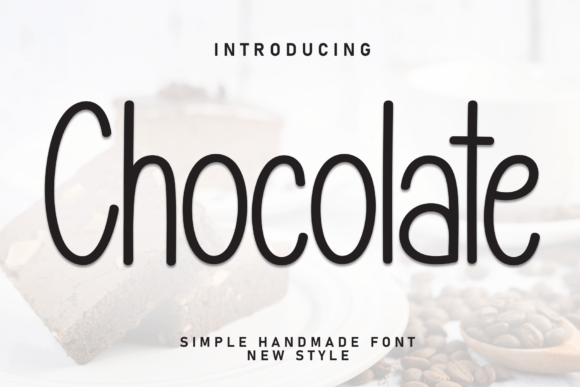
There’s a reason certain fonts feel instantly familiar and inviting. They carry a personality that transcends mere letters on a page, evoking a specific emotion or setting a particular tone. Chocolate Font is one such typeface. It’s a sweet, friendly, and undeniably cute handwritten font that feels like a warm, personal note from a friend. Its soft, rounded letterforms and playful rhythm make it a go-to for projects that need a genuine, approachable, and fun touch. But beyond its obvious charm lies a versatile creative font with practical applications across a surprising range of design work.
Understanding the Personality Behind the Typeface
At its core, Chocolate Font is a script font in the handwritten font category, but it leans more towards a neat, legible print-style script than a flowing cursive. Think of it as your most legible friend’s handwriting—clear, consistent, and full of character. The visual style avoids sharp, aggressive angles in favor of gentle curves and smooth connections between some characters. This gives it a soft, organic quality that feels handmade and authentic. Its overall appeal lies in this balance: it’s casual enough to feel personal, yet structured enough to be used in professional contexts where a human touch is desired. It’s not trying to be a formal serif font or a stark sans serif font; it exists comfortably in a space of friendly informality.
Where Chocolate Font Truly Shines: Practical Applications
The true value of any premium font is revealed in its application. Chocolate Font excels in scenarios where you need to inject warmth, personality, and approachability. Its strengths are most evident in projects centered around celebration, personal connection, and creative expression.
- Wedding and Event Invitations: This is perhaps its most natural habitat. The font’s sweetness is perfect for wedding invitations, save-the-dates, and party announcements. It sets a joyful, intimate tone from the very first glance, telling guests this event will be personal and heartfelt.
- Greeting Cards and Stationery: For card designers and stationery brands, Chocolate Font is a workhorse. It’s ideal for heartfelt messages, thank-you notes, and playful birthday cards. Its legibility ensures the sentiment isn’t lost, while its style amplifies the emotional connection.
- Brand Identity for Certain Niches: For a small business owner crafting a brand identity, this font can be a secret weapon. It’s perfect for bakeries, boutique gift shops, children’s clothing brands, artisanal food producers, or any service that wants to emphasize a homemade, caring, and friendly ethos. It can be used in logos, product packaging, and marketing materials to instantly communicate approachability.
- Digital and Social Media Content: In the fast-paced world of social media graphics, standing out with personality is key. Use Chocolate Font for Instagram quotes, Pinterest pins, YouTube thumbnails, or Facebook event covers. It grabs attention not with loudness, but with a friendly wave, making your content feel more relatable and shareable.
- Publishing and Editorial Design: While not suited for long body text, it’s a fantastic display font for editorial design. Think chapter titles in a lifestyle cookbook, pull quotes in a blog post, or headlines in a craft magazine. It adds a layer of warmth and breaks up the monotony of standard body typefaces.
Making It Work: Pairing, Readability, and Professional Use
Integrating a distinctive font like Chocolate Font into a design system requires a thoughtful approach. Its very strength—its strong personality—means it needs careful handling to maintain professionalism and clarity.
Strategic Font Pairing is Essential
The most critical technique is font pairing. Because Chocolate Font has a lot of character, it should almost always be paired with a neutral, highly legible typeface. A clean sans serif font like Open Sans, Lato, or Montserrat makes an excellent partner for body text, providing a calm counterbalance. For a more classic look, a simple, sturdy serif font like Georgia or Merriweather can also work. The rule of thumb: let Chocolate Font be the star for headlines, logos, or short callouts, and let its partner handle the heavy lifting of paragraphs and descriptions.
Evaluating Project Fit and Readability
Before committing, always ask: does this project’s tone match the font’s personality? A law firm’s website? Probably not. A children’s birthday party planner’s brochure? Absolutely. Readability is also paramount. Test it at the actual size it will be used. While legible for a handwritten font, its charm diminishes if set too small in long blocks of text. It’s a creative font best used for short bursts of impactful text.
Understanding What You’re Getting
When you acquire Chocolate Font, review the full character set. Does it include numerals, punctuation, and multilingual support? Does it have stylistic alternates or ligatures that can add extra flair? Knowing your design assets fully allows you to use them effectively. Furthermore, for any commercial project—whether for a client, your own business, or products for sale—ensure you have the correct commercial font license. This is non-negotiable for professional work and protects both you and the font creator.
In the end, Chocolate Font is more than just a sweet-looking typeface. It’s a strategic tool for designers, marketers, and entrepreneurs who understand that modern typography is about communication and connection. Used wisely, it can soften a brand’s edges, make a message feel more personal, and transform a simple design into something that resonates on a human level. Its value lies not in being used everywhere, but in being used in the right places to create that perfect, friendly touch.