Flowing Arc Font: A Sweet, Friendly Choice for Creative Projects
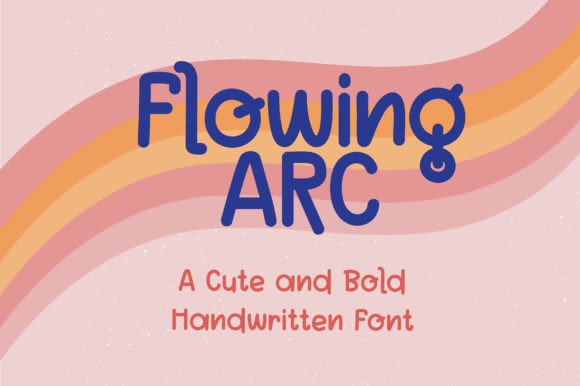
There’s a certain warmth that a handwritten font can bring to a design, a human touch that sterile, geometric typefaces often miss. Flowing Arc Font captures this feeling perfectly. It’s a sweet and friendly handwritten font, designed to feel both natural and uniquely personal. Its gentle curves and organic flow make it an incredibly versatile display font, suitable for a surprisingly wide range of applications. The only real constraint is your own creativity.
The Visual Personality: More Than Just Curves
At first glance, Flowing Arc Font presents a casual, approachable character. It’s not a rigid, perfect script; it has the charming irregularity of real handwriting. The letterforms connect with a smooth, flowing rhythm, creating a sense of movement and ease. This isn’t a formal script font for wedding invitations alone—it’s a creative font with a relaxed, contemporary vibe. The slight variations in stroke weight and baseline give it authenticity, making text feel hand-lettered rather than mechanically generated. This personality is its greatest strength, allowing it to convey friendliness, creativity, and approachability without saying a word.
Where Flowing Arc Font Truly Shines
Understanding a font’s ideal use cases is key to effective design. Flowing Arc Font excels in contexts where warmth and personality are paramount. Think of projects that need to connect on a human level.
In brand identity and logo design, it can be perfect for businesses in the lifestyle, wellness, artisanal food, boutique retail, or creative services sectors. A logo using Flowing Arc instantly suggests a brand that is personal, attentive, and not part of a cold corporate machine. It works beautifully for a local bakery, a yoga studio, a freelance photographer, or a handmade jewelry line.
For marketing and social media graphics, its friendly tone is a major asset. Use it for headlines on Instagram posts, quotes, call-to-action buttons, or promotional banners. It grabs attention while maintaining a welcoming feel, which can boost engagement. In packaging design, especially for products targeting a female demographic or those with a homemade, organic, or gourmet quality, Flowing Arc adds a layer of charm and perceived care.
Within editorial design and web design, it serves as a powerful accent font. Pair it with a clean sans serif font or a traditional serif font for body text to create clear visual hierarchy. Use it for pull quotes, chapter titles, subheadings, or featured product names to break up monotony and inject personality. It’s also a wonderful choice for personal projects like blog headers, digital planners, greeting cards, and craft projects.
Making It Work: Practical Guidance for Designers and Creators
Choosing any premium font requires thoughtful evaluation. Here’s how to approach Flowing Arc Font for your work.
First, evaluate the project fit. Does your project’s message align with a sweet, friendly, and approachable aesthetic? If you’re designing for a law firm or a financial institution, this probably isn’t your primary typeface. But for a café menu, a children’s book title, or a wedding stationery suite, it could be ideal.
Next, consider readability. As a handwritten font, its legibility decreases with smaller sizes and longer blocks of text. Use it for short headlines, titles, logos, and accents—not for body copy. Always test it at the intended size on both screen and print to ensure clarity. The context matters: a bold headline on a poster has different needs than a delicate note on a gift tag.
Font pairing is crucial. Flowing Arc’s organic style contrasts beautifully with structured typefaces. Try pairing it with a geometric sans serif font like Montserrat for a modern, clean look. For a more classic, editorial feel, combine it with a transitional serif font like Garamond. The contrast creates balance and ensures the handwritten element stands out without overwhelming the design. Experiment with different combinations to see what supports your overall layout and message.
Finally, review the included styles and licensing. Check what weights, alternates, or glyphs are included. Does it have the special characters or language support you need? For any commercial font, thoroughly read the license agreement. Understand if it covers the number of users, the types of projects (print, digital, merchandise), and any restrictions. This step is non-negotiable for professional use and avoids legal issues down the line.
Ultimately, Flowing Arc Font is a versatile design asset. It’s a tool for adding a specific emotional flavor to your work. By thoughtfully integrating it into your modern typography toolkit, you can create designs that feel more personal, engaging, and memorable. It’s not about using it everywhere, but about using it where its unique charm can make the greatest impact, helping your project—and your brand—connect more deeply with its audience.