Moria Story Font: Adding a Real Handwritten Feel to Your Projects
There's a certain magic in handwriting that digital text often misses. It's the slight pressure of a pen, the unique flow of each letter, the imperfection that makes it feel human. We've all received a note written by hand that felt more personal than any typed message. In a world saturated with clean, geometric sans serif fonts and formal serif typefaces, this personal touch is becoming a rare and valuable design asset. This is the space where the Moria Story Font thrives, offering a bridge between the efficiency of digital tools and the authentic warmth of human creation.
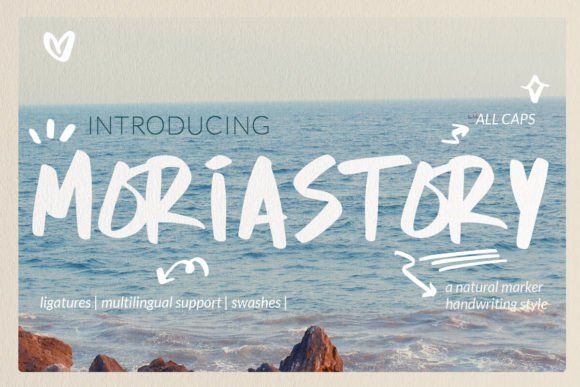
At its core, Moriastory is a premium font designed to mimic realistic, swift handwriting. It's not a playful, childish scrawl or an overly formal calligraphic script. Instead, it captures the essence of someone jotting down thoughts quickly—a natural, flowing style that feels both energetic and genuine. The typeface includes two distinct uppercase letter variations, allowing you to avoid the repetitive look that can plague other script fonts. This subtle variation is key to achieving an authentic handwritten feel, as our own handwriting naturally changes slightly with each letter we write. Furthermore, the inclusion of unique ligatures means certain letter combinations connect in a fluid, organic way, enhancing the natural rhythm of the text.
Where Does Moriastory Shine? Real-World Applications
The strength of a creative font like Moriastory lies in its versatility. It's not meant for long paragraphs of body copy, but for moments where personality and connection are paramount. Think of it as a design tool for adding a human layer to your work.
For brand identity, this handwritten font can be transformative. It’s perfect for a logo design for a boutique coffee shop, a local florist, a personal coach, or any business that wants to convey approachability and authenticity. It can be used in packaging design for artisan products, making the label feel like a personal note from the maker. When used in marketing materials, such as social media graphics or email headers, Moriastory can cut through the digital noise. A quote highlighted in this font feels more like a shared thought than a corporate message. For bloggers and content creators, it works beautifully for pull quotes, section headings in editorial design, or the title of a personal essay, adding a layer of intimacy to the reading experience.
Even in web design, where readability is king, this display font has its place. Used sparingly for a hero section headline, a call-to-action button, or a "Meet the Founder" section, it can inject personality into an otherwise sterile digital interface. The key is strategic placement. You wouldn't use it for your main navigation or product descriptions, but for those accent moments that need to feel personal.
Making It Work: Practical Guidance for Designers and Creators
Choosing a font is just the first step; using it effectively is where the real craft comes in. Here’s how to get the most out of Moriastory.
First, evaluate the project fit. Is the goal to feel friendly, personal, and slightly informal? If you're designing for a law firm or a financial institution, Moriastory is likely not the right choice. But for a wedding invitation, a yoga studio's website, or a cookbook, it could be perfect. Always match the font's personality to the project's core message.
Next, master font pairing. A handwritten font like this needs a stable partner. The most effective pairings usually involve a clean, neutral sans serif font or a classic, readable serif font. Use Moriastory for the headline or a key phrase, and let its partner handle the bulk of the text. This creates a clear visual hierarchy and ensures overall readability. For example, pairing Moriastory with a geometric sans serif like Montserrat or a humanist serif like Lora creates a beautiful contrast between the organic and the structured.
Don't forget to explore the font's features. With two uppercase sets, you can manually alternate letters in your design software to avoid repetition and enhance the natural look. Test the ligatures to see how they flow. Pay close attention to kerning and tracking, as handwritten fonts often need slight adjustments to ensure letters sit comfortably next to each other, especially at different sizes.
Finally, always review the commercial font licensing. Ensure the license covers your intended use, whether it's for a client's brand identity, products for sale, or digital downloads. Moriastory is a premium font, meaning it comes with professional-grade features and licensing designed for commercial work, giving you peace of mind for any project.
The Impact on Perception and Engagement
Why go through this effort? Because typography profoundly influences how an audience perceives a message. A well-chosen font like Moriastory can elevate brand perception, making a brand feel more human, relatable, and trustworthy. It builds recognition by creating a distinct visual voice. In a crowded market, this unique character can be a significant differentiator.
When used consistently across touchpoints, it contributes to a cohesive brand identity. A customer should have a similar feeling whether they see your logo, your Instagram post, or your packaging. Moriastory helps create that consistent, personal thread. Ultimately, this thoughtful approach to modern typography fosters better audience engagement. People are drawn to things that feel authentic. By using a font that mimics real handwriting, you’re not just displaying text; you’re initiating a conversation, making your audience feel seen and understood on a more personal level.
In the end, tools like the Moriastory typeface are about more than just letters. They are about capturing a feeling. They allow designers, entrepreneurs, and creators to imbue their digital and print projects with the irreplaceable warmth of the human hand, creating work that resonates on a deeper, more personal level.