Mueband: The Magical Handwritten Font for Elegant Design
There's a certain magic in a font that feels both personal and polished. You've likely seen it—a logo that seems to whisper its story, a wedding invitation that feels like a handwritten note from a friend, or a product label that stands out on a crowded shelf with quiet confidence. This is the space where Mueband operates. It’s not just another script font in a designer's toolkit; it’s a carefully crafted tool that bridges the gap between authentic, flowing calligraphy and the clean, reliable structure needed for professional design work.
Understanding the Character of Mueband
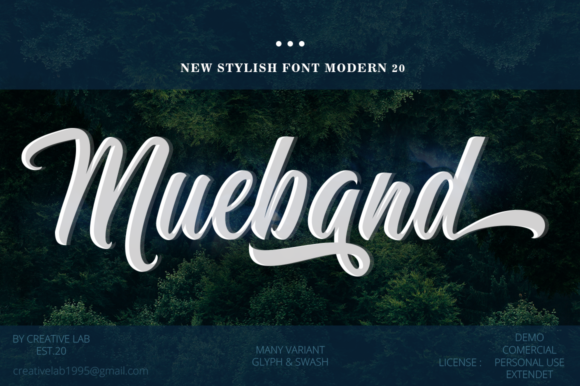
At its core, Mueband is a premium handwritten font, but that simple label doesn't do it justice. Its creation involved more than just digitizing brush strokes; it was about capturing a feeling. The typeface exhibits a classic, timeless elegance, with letterforms that have a natural, slightly varied baseline and gentle swashes that add character without overwhelming the text. This isn't a chaotic, messy script. It maintains a friendly, approachable feel, making it incredibly versatile. The strokes have a consistent weight that ensures readability, even at smaller sizes, a common challenge with many script and handwritten fonts. It’s this balance—between the warmth of human touch and the precision of modern typography—that gives Mueband its unique appeal.
The visual personality of Mueband is one of refined authenticity. It suggests craftsmanship, care, and a personal touch. It doesn't shout for attention; instead, it draws the viewer in with its sophisticated charm. This makes it an excellent choice for projects where you want to convey quality and thoughtfulness, whether it's for a boutique brand, a heartfelt personal project, or high-end editorial design.
Where Mueband Truly Shines: Practical Applications
The real value of any creative font lies in its application. Mueband excels in scenarios where the goal is to create an emotional connection or establish a distinctive brand identity. Let's explore where this typeface can make a tangible difference.
- Branding and Logo Design: For businesses in the lifestyle, wellness, fashion, artisan food, or wedding industries, Mueband can form the cornerstone of a visual identity. It works beautifully for logotypes, especially when paired with a simple, clean sans serif font for body text. The key is to use it for the brand name or a tagline, allowing its elegant personality to define the brand's voice without sacrificing clarity in longer copy.
- Packaging Design: On a shelf, a product has seconds to make an impression. Mueband can elevate packaging for cosmetics, gourmet foods, candles, or boutique goods, giving it a handcrafted, premium feel. It suggests that the product inside is made with care and attention to detail, which can significantly influence perception and purchasing decisions.
- Editorial and Publishing: In magazines, book covers, or blog headers, Mueband can be used for pull quotes, chapter titles, or feature article headlines. It adds a layer of visual interest and a human, conversational tone that draws readers in. Pairing it with a serif font for body text creates a beautiful contrast between traditional and personal styles.
- Digital and Social Media: In the fast-scrolling world of social media, unique typography stops thumbs. Mueband is perfect for creating engaging Instagram story templates, Pinterest graphics, or YouTube thumbnails. Its readability holds up well on screen, and its distinctive style helps build visual consistency across digital platforms, which is crucial for brand recognition.
- Print and Stationery: This is where a font like Mueband feels most at home. Think wedding invitations, greeting cards, thank you notes, and event programs. It brings a personal, celebratory quality to print materials that standard fonts often lack. For small business owners creating their own business cards or stationery, it adds a professional yet personal touch.
Making Mueband Work for You: A Designer's Guidance
Choosing the right font is a strategic decision. Here’s how to approach Mueband to ensure it enhances your project rather than complicates it.
Evaluate the Project's Voice: Before selecting any font, define the project's personality. Is it modern and minimalist? Traditional and luxurious? Playful and whimsical? Mueband leans toward classic elegance with a friendly undercurrent. If your project needs to feel sterile, ultra-modern, or aggressively bold, another typeface might be more suitable. It’s about alignment between the font's inherent character and the message you need to communicate.
Master Font Pairing: Rarely does a single font carry an entire design. Mueband shines when paired thoughtfully. The general rule of contrast applies: pair it with a font that offers a different structure. A clean, geometric sans serif font provides a perfect, stable counterbalance to Mueband's flowing lines. A classic serif font can also work, creating a more traditional and luxurious hierarchy. The goal is to let Mueband be the star for headlines or key phrases, while its partner font handles the heavy lifting of body text with clarity and ease.
Consider Readability and Context: Always test the font in the context where it will be used. A headline on a poster has different requirements than a small line of text on a website footer. While Mueband is designed for better readability than many script fonts, it's still a display typeface. Use it for short bursts of text—headlines, logos, labels, call-to-action buttons—where its personality can be appreciated without hindering comprehension. Avoid setting long paragraphs in it.
Review the Included Styles and Licensing: A professional font family often includes multiple weights, stylistic alternates, and ligatures. Check what Mueband offers. Does it have a bold version for emphasis? Are there different letter variations that can help avoid repetition in a logo? Furthermore, for any commercial project, ensure you understand the licensing. Most premium fonts like Mueband require a commercial license for use in logos, products for sale, or client work. This is a critical step in maintaining professionalism and respecting the work of the font's creator.
A Final Thought on Using Mueband
The most successful designs feel intentional. Mueband isn't a font you use just because it's pretty. You use it when you want to infuse a project with a sense of elegance, authenticity, and personal touch. It’s a design asset that, when used thoughtfully, can help tell a more compelling story, strengthen a brand's identity, and create a more engaging experience for your audience. Experiment with it, test its limits, and see where its unique magic can take your next project.