Grillin: Igniting Creativity with a Fun, Powerful Display Font
Every now and then, a typeface crosses your desk that doesn’t just sit there—it practically jumps off the screen with personality. That’s exactly what happens when you open up Grillin. This isn’t just another display font; it’s a declaration of style. In a landscape saturated with safe, neutral typography, Grillin offers a breath of fresh air, bringing a sense of movement and energy that can transform a mundane layout into something memorable.
As a designer or content creator, you know the struggle of finding a typeface that captures a specific vibe without looking like a clip-art novelty. Grillin manages to balance fun with professionalism. It possesses a distinct visual weight and a robust character structure that commands attention. Whether you are working on a headline for a landing page or the masthead for a print publication, this premium font vibe—available here as a freebie—gives you the tools to make a statement.
The Anatomy of Energy: Understanding Grillin’s Visual Style
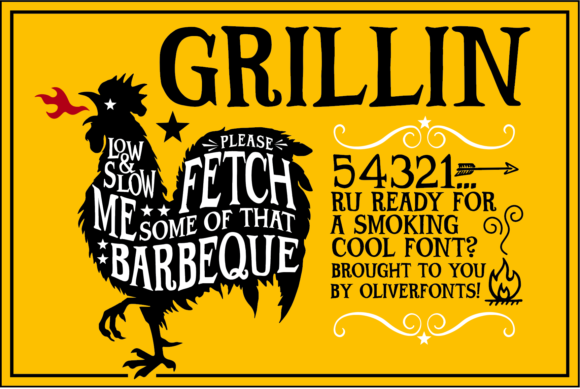
To use a font effectively, you have to understand its anatomy. Grillin falls firmly into the category of bold, expressive typography. It likely features strong strokes and a high-impact presence, making it ideal for situations where legibility at a distance is key, but standard sans-serif fonts feel too sterile. While it isn’t a serif font in the traditional sense, it carries a weight often associated with slab serifs, providing that grounded, stable feeling.
The personality of Grillin is undeniably approachable yet confident. It avoids the rigidity of geometric sans serif font families. Instead, it embraces a more human touch. You might notice subtle irregularities or dynamic curves that suggest hand-craftsmanship, bridging the gap between a standard display font and a handwritten font. This makes it incredibly versatile for brands that want to appear human-centric rather than corporate and cold.
Furthermore, the character spacing and kerning are crucial in a font like this. Because it is designed to be a showstopper, Grillin works best when given room to breathe. It’s not designed for dense body copy; rather, it thrives in the spotlight of headers and logos. Its visual appeal lies in its ability to hold the viewer's gaze, creating an immediate emotional connection before a single word is fully read.
Strategic Applications: From Barbecue to Branding
The prompt mentions barbecue, and rightfully so—Grillin has that smoky, rustic charm that screams outdoor dining and summer festivals. However, limiting this typeface to food-related packaging design would be a mistake. The true power of a creative font like this lies in its adaptability. It carries a vibe of "good times" and "authenticity," which are values many modern brands are chasing.
Consider the world of editorial design. If you are a blogger or publisher writing about lifestyle, travel, or DIY projects, using Grillin for your chapter titles or pull quotes can inject immediate personality into your pages. It breaks the monotony of standard text layouts and guides the reader's eye to the most important parts of the story. Similarly, in web design, a bold header font reduces bounce rates because it promises the user that the content ahead is engaging.
For entrepreneurs and small business owners, logo design is perhaps the most critical application. A logo needs to be scalable and recognizable. Grillin offers a distinct silhouette that aids in brand recognition. Imagine this font on a coffee bag, a craft beer label, or a boutique clothing tag. It suggests a brand that doesn't take itself too seriously but still cares deeply about quality. It’s also a powerhouse for social media graphics. In the fast-scrolling environment of Instagram or TikTok, you have milliseconds to capture attention. The bold nature of Grillin stops the thumb.
Design Mechanics: Pairing, Hierarchy, and Readability
Using a strong display font requires a bit of strategy, particularly regarding font pairing. Because Grillin has such a distinct personality, you need a supporting cast that doesn't compete with it. A common mistake is pairing a decorative display font with another stylized script font. This creates visual noise.
Instead, look for contrast. A clean, geometric sans serif font works beautifully alongside Grillin. The neutrality of the sans-serif allows Grillin to shine in the headlines without overwhelming the reader. If you are going for a more classic, editorial look, a simple, readable serif font for your body text can provide a sophisticated counterpoint to Grillin’s playful energy. The key is to let Grillin handle the emotion and let the secondary font handle the information.
Visual hierarchy is another area where this typeface excels. By using Grillin for your primary headers (H1s and H2s), you instantly establish a structure. The eye is drawn to the weight and style of the header first, then naturally flows to the lighter body text. This improves the overall user experience of your design assets, making your message easier to digest.
However, readability must be monitored. While Grillin is designed for impact, always test your leading (line height) and tracking (letter spacing). If the letters feel too cramped, the intricate details of the font might get lost, especially in smaller sizes. For packaging design or signage, ensure there is enough contrast between the text color and the background to maintain legibility. A dark Grillin font on a textured background works well, provided the texture isn't too busy.
Practical Integration: Licensing and Workflow
One of the most stressful parts of using a commercial font is navigating the licensing. It is vital to understand the terms of use for any typeface you download. Since Grillin is presented as a freebie, it is a fantastic resource for startups and hobbyists watching their budget. However, always double-check if the license covers commercial use. Can you use it on a product you sell? Can you use it in a client’s logo?
When incorporating Grillin into your workflow, treat it as a design asset, not just a file. Keep it organized in your font library. When you are building your brand identity guidelines, document exactly where and how Grillin should be used. Specify that it is for "Headlines Only" or "Logo Use" to ensure consistency across all platforms.
Finally, don't be afraid to experiment. Modern typography is about breaking rules to find what works. Try Grillin in all caps for a more authoritative look, or use it in lowercase for a friendlier, more casual vibe. Test it on different mockups—business cards, t-shirts, website hero images—to see how it holds up. A font like Grillin is a tool for expression; use it to bring your unique ideas to life, and you’ll find it adds a spark to everything you create.